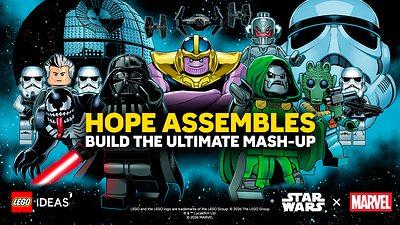
THE LEGO GROUP INVITES FANS TO MASH-UP STAR WARS™ AND MARVEL UNIVERSES FOR THE FIRST TIME EVER IN LEGO IDEAS® CHALLENGE
- New LEGO Ideas® challenge invites fans to create a first-of-its-kind cross-universe moment in LEGO bricks to celebrate iconic storytelling worlds of Star Wars™ and Marvel.
- The announcement was made at New York Comic Con during a panel featuring Kevin Smith; actor, director and Marvel Comics writer.
- Now open, fans can choose from three building themes – vehicles, characters, or scenes – to inspire the Star Wars and Marvel mash-up and submit via the LEGO Ideas platform.
NEW YORK, Oct. 11, 2026 /PRNewswire/ -- Today at New York Comic Con (NYCC), the LEGO Group announced a first-of-its-kind LEGO® Ideas challenge. For the first time ever, fans are invited to mash-up Star Wars™ and Marvel by reimagining characters, vehicles and scenes from the two universes in LEGO form.
What's more, the LEGO Ideas platform means that once the build has been submitted and fans have voted on the design, the favourite submissions will then become immortalised as an official LEGO product.
Fede Begher, Senior Vice President and Head of Product Group at the LEGO Group, said: "This challenge is a milestone for LEGO Ideas and our fan community. For the first time ever, fans can build with both Marvel and Star Wars in a single LEGO Ideas challenge, unlocking entirely new possibilities for creativity and storytelling. We know our fans never stop imagining new ways to bring their favourite worlds together, and we're excited to see the originality, passion and innovation they bring to this unique crossover."
As a tribute to the landmark 50th anniversary of the Star Wars franchise in 2027, the Star Wars/Marvel: Hope Assembles comic series was unveiled this past summer. Launching in January, it's the first-ever crossover between the Star Wars and Marvel Comics universes. The LEGO Ideas challenge celebrates that crossover and honours the 50th anniversary.
Open from today, fans simply need to visit ideas.lego.com, choose from three challenge themes of mashing up Star Wars and Marvel vehicles, characters or scenes, review all challenge rules and guidelines, and then get building with LEGO elements. Voting for the submissions begins December 15, 2026, with the Grand Prize Selections being announced next year.
For more information, please visit ideas.lego.com/campaigns/hope-assembles.
About the LEGO Group
The LEGO Group's mission is to inspire and develop the builders of tomorrow through the power of play. The LEGO System in Play, with its foundation in LEGO bricks, allows children and fans to build and rebuild anything they can imagine.
The LEGO Group was founded in Billund, Denmark in 1932 by Ole Kirk Kristiansen, its name derived from the two Danish words LEg GOdt, which mean "Play Well".
Today, the LEGO Group remains a family-owned company headquartered in Billund. Its products are now sold in more than 120 countries worldwide.
For more information: www.LEGO.com
About the LEGO Ideas platform
LEGO Ideas offers fans the opportunity to submit their own brick creations with the chance to have their concept brought to life with the help of LEGO master designers and a share of the profits. Find out more at www.ideas.LEGO.com.
STAR WARS and related properties are trademarks and/or copyrights, in the United States and other countries, of Lucasfilm Ltd. and/or its affiliates. © & TM Lucasfilm Ltd.
© 2026 MARVEL
 View original content to download multimedia:https://www.prnewswire.co.uk/news-releases/the-lego-group-invites-fans-to-mash-up-star-wars-and-marvel-universes-for-the-first-time-ever-in-lego-ideas-challenge-302905160.html



