Scandit Launches Automated, Age Verified Self-Checkout That Reduces Friction, Improves Compliance
Smart data capture solution, powered by vision AI, self-verifies consumers in under 10 seconds with data privacy assured enabling retailers to optimize labor and ensure compliance
ZURICH, July 8, 2026 /PRNewswire/ -- Scandit, the leader in smart data capture, today announced Age Verified Self-Checkout, a new solution that enables retailers to automate and verify self-checkout purchases of age-restricted items to reduce lane delays, remove avoidable associate intervention and improve compliance.
Built for retailers selling products such as alcohol, tobacco and medication, Age Verified Self-Checkout delivers a fully autonomous checkout with no additional kiosk hardware needed. It addresses one of the biggest sources of friction in self-checkout: the need for store associates to manually intervene on the 9 billion age-restricted, self-checkout transactions globally each year*. With this solution, 80% of age checks are resolved automatically in seconds - removing the need for associate intervention, while the verification process is 6x faster for the customer. The streamlined checks result in 5% more transactions across a retailer's full self-checkout fleet leading to shorter queues and increased sales - especially during peak hours.
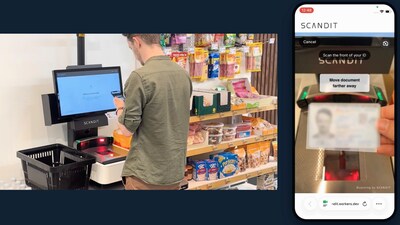
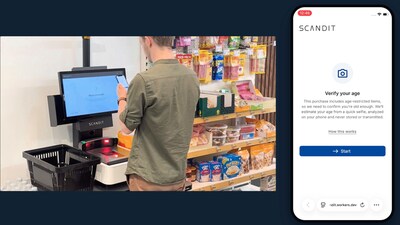
By turning a customer's smartphone into a private, secure, instant age-check tool, the solution allows shoppers to verify their age in under 10 seconds with no app download required primarily via face estimation technology or scanning their ID as an alternative.
In addition to helping retailers avoid the cost and maintenance burden of hardware-based alternatives, it helps them improve operations in three key areas:
- Fraud prevention: The photo-comparison technology catches underage ID fraud that card-reader solutions cannot and associates may not, including underage customers using someone else's ID.
- Labor optimization: Automation frees store associates from routine age checks and uncomfortable situations, while allowing them to focus on higher-value tasks.
- Revenue lift: The always-available solution keeps self-checkout lanes moving leading to increased sales.
"Retailers are under pressure to deliver faster, more convenient self-checkout experiences, yet age-restricted sales remain a persistent bottleneck and one that only intensifies as self-checkout fleets scale," said Christian Floerkemeier, CTO and Co-founder of Scandit. "Today, retailers are forced to choose between absorbing the ongoing labor cost of manual checks or investing in proprietary hardware, neither of which scales efficiently. Age Verified Self-Checkout removes this tradeoff by automating compliance in a fast, secure and hardware-free way, which reduces intervention and optimizes labor."
Powered by Scandit Smart Data Capture with vision AI, the solution marks Scandit's first entry into biometrics and has been designed with privacy at its core. With 100% on-device processing, no biometric or ID data is transmitted or stored by Scandit or retailers. It also complies with key standards, including GDPR, CCPA, ISO/IEC 27566-1, ISO27001 and UKAS Challenge 25 certification.
Age Verified Self-Checkout is designed to be fast and intuitive with a selfie-first design that will verify most shoppers in one step. When a shopper scans a restricted item at self-checkout, the kiosk displays a QR code. The shopper scans the code with their smartphone, which opens a verification page in the browser. The customer then takes a quick selfie, and on-device vision AI estimates their age instantly. If the estimate is above the retailer's threshold, the checkout continues automatically. If the estimate falls below the threshold, the customer is prompted to scan an ID, which is read on-device and compared against the selfie photo to help detect underage customers attempting to use someone else's ID. The kiosk then receives a single pass/fail signal.
Age Verification Self-Checkout is suited to grocery, supermarket, fuel and convenience retail environments with high self-checkout volumes, strong demand for age-restricted products and limited store labor availability.
*Based on Scandit calculations
About Scandit
Scandit is the leader in smart data capture, powered by vision AI, giving superpowers to workers, customers, and businesses by providing actionable insights and automating end-to-end processes. Its Smart Data Capture platform enables smart devices, such as smartphones, handheld computers, drones, digital eyewear, robots, and fixed cameras to interact with physical items by capturing data from barcodes, text, IDs, and objects with unmatched speed, accuracy, and intelligence.
Scandit enables innovation that delivers significant cost savings, increases employee retention and customer loyalty. The company partners with customers at every step with trials, solution design, integration, and customer success support included.
Visit scandit.com to learn why market leaders across retail, transport and logistics, healthcare and manufacturing like Instacart, Carrefour, Ahold Delhaize, Albertsons, Levi Strauss & Co., Sephora, Lufthansa, and FedEx trust Scandit.
Video - https://mma.prnewswire.com/media/3004532/Scandit_1.mp4
Image - https://mma.prnewswire.com/media/3004529/Scandit_2.jpg
Image - https://mma.prnewswire.com/media/3004530/Scandit_3.jpg
Image - https://mma.prnewswire.com/media/3004531/Scandit_4.jpg
Logo - https://mma.prnewswire.com/media/2800200/6023158/Scandit_Logo.jpg


 View original content:https://www.prnewswire.co.uk/news-releases/scandit-launches-automated-age-verified-self-checkout-that-reduces-friction-improves-compliance-302819912.html