Lenovo Unveils ThinkVision P27UL-40 IJP OLED Professional Monitor at IFA 2026
SHENZHEN, China, Sept. 23, 2026 /PRNewswire/ -- Lenovo recently unveiled the ThinkVision P27UL-40 IJP (Inkjet Printing) OLED professional monitor—the brand's first 27" UHD IJP OLED Thunderbolt™ docking monitor for commercial environments and remote collaboration. Created for professionals who demand exceptional visual accuracy, the new display produces sharper text, uninterrupted workflows, and all-day comfort across office work, content creation and multimedia entertainment. The new display is the latest to be powered by TCL CSOT's IJP OLED technology, which delivers major improvements in text color fringing and is already being mass produced across a range of consumer and professional applications.
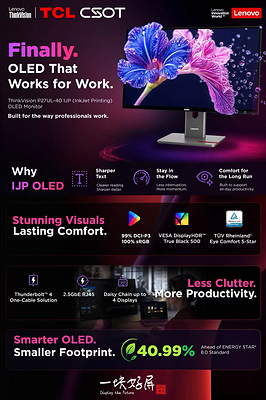
An all-new professional OLED monitor built for work
Featuring a 27-inch UHD 120Hz IJP OLED panel, the ThinkVision P27UL-40 leverages TCL CSOT's IJP OLED technology to produce vivid contrast and vibrant color accuracy with improved energy efficiency while bringing OLED technology into reach for more professionals. With UHD (3840 x 2160) resolution, 99% DCI-P3, 100% sRGB color gamut coverage, and VESA DisplayHDR™ True Black 500 certification, the ThinkVision P27UL-40 delivers exceptionally clear visuals, while the IJP OLED panel's Real Stripe RGB pixel layout reduces color fringing, providing altogether sharper text and improved clarity for content creation, design, and other professional applications.
ThinkVision P27UL-40 receives three IFA 2026 Awards as IJP OLED redefines professional office displays
Following its debut at IFA 2026, the ThinkVision P27UL-40 was recognized as one of the show's standout products this year, winning three honors, The Gadgeteer's Best of IFA 2026 Award, The Techfinitive's Best of IFA 2026 Award, and the OLED Display Solutions Gold Award at the 2026 Global Product Technology Innovation Awards.
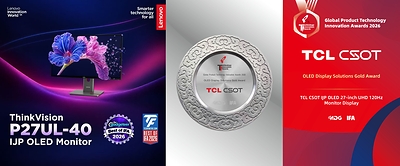
At the heart of this award-winning performance is TCL CSOT's advanced IJP OLED display technology. Built on the exclusive Real Stripe RGB pixel design, it reduces text color fringing to deliver ultra-clear text presentation and exquisite detail for professional users. By minimizing visual distractions, the innovative display panel also helps users maintain focus and improve workflow continuity, all while providing longer viewing comfort to support all-day work.
From professional medical displays to high-end consumer display products, TCL CSOT's technology is used to power screens spanning a full spectrum of form factors, sizes, and applications, transforming cutting-edge display technologies into new end-user experiences. Moving forward, TCL CSOT will continue to work with partners to extend the application of groundbreaking technologies like IJP OLED across more products and devices, bringing higher image quality and superior user experiences to users while driving wider development of the display industry.

 View original content to download multimedia:https://www.prnewswire.co.uk/news-releases/lenovo-unveils-thinkvision-p27ul-40-ijp-oled-professional-monitor-at-ifa-2026-302887807.html




